Understanding Macular Degeneration
Learn how macular degeneration affects central vision and why early monitoring matters.
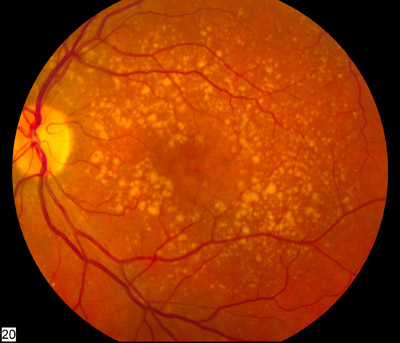
What is macular degeneration?
Age-related macular degeneration (AMD) affects the macula, the part of the retina responsible for sharp central vision. AMD typically impacts activities such as reading, driving, and recognizing faces.
There are two main types. Dry (atrophic) AMD is more common and tends to progress slowly. Wet (neovascular) AMD is less common but can lead to faster vision changes because abnormal blood vessels leak beneath the retina.
Symptoms include blurred or distorted central vision, straight lines appearing wavy, and needing brighter light for near tasks. Because changes can be subtle early on, routine monitoring is important.
How we monitor and treat
Monitoring includes a dilated eye exam and retinal imaging such as optical coherence tomography (OCT). Treatment may include AREDS2 vitamin supplements for certain stages of AMD and intravitreal injections for wet AMD. Lifestyle changes such as smoking cessation and cardiovascular risk control are also important.
AREDS2 supplements are recommended for people with intermediate AMD or advanced AMD in one eye. These supplements do not prevent AMD but can slow progression in certain patients.
Sources
Image Credit
- Intermediate age-related macular degeneration (National Eye Institute, public domain)
